Carved by fire and sculpted by ice beneath the formidable Mýrdalsjökull glacier, Katla Ice Cave is a living geological masterpiece shaped by centuries of volcanic fury and glacial movement. Few places on Earth so vividly illustrate the raw, untamed forces that forged Iceland itself.
The story of Katla Ice Cave begins not with human hands but with the explosive temperament of Katla volcano, one of Iceland's most powerful and historically active volcanoes, lurking beneath the Mýrdalsjökull glacier in southern Iceland. Katla has been erupting for at least 6,500 years, with recorded eruptions dating back to 934 AD. Each eruption sends superheated magma surging beneath thousands of meters of glacial ice, melting vast quantities of water in catastrophic glacial floods known as jökulhlaups. Over millennia, these repeated cycles of eruption, melting, and refreezing carved extraordinary subglacial passages, voids, and chambers — the geological ancestors of the caves visitors explore today.
The Mýrdalsjökull glacier, which blankets Katla volcano and covers approximately 596 square kilometers, is the fourth-largest ice cap in Iceland. Its immense weight and constant movement have worked in concert with geothermal heat rising from below to shape a labyrinthine world beneath the ice. Glacial meltwater streams, volcanic ash layers compressed between ice strata, and the relentless creep of the glacier itself have all contributed to forming the dramatic tunnels and chambers found within Katla Ice Cave. Unlike static limestone caves, these ice formations shift, grow, and transform continuously, making every visit a genuinely unique encounter with a living geological environment.
Katla volcano holds a place of profound significance in Icelandic history and culture. The volcano has produced at least 20 major eruptions since Iceland's settlement in the 9th century, with documented events in 934, 1311, 1357, 1416, 1440, 1500, 1580, 1612, 1625, 1660, 1721, 1755, 1823, and most recently in 1918. The 1918 eruption was particularly dramatic, producing a jökulhlaup estimated to have released 300,000 cubic meters of water per second — a flow rate briefly exceeding the combined discharge of the Amazon and Congo rivers. These catastrophic floods swept boulders and icebergs the size of houses out onto the Mýrdalssandur black sand plain, reshaping Iceland's southern coastline permanently.
Icelandic sagas and early historical records treat Katla with a mixture of reverence and dread. The volcano is named after a legendary housekeeper called Katla, who according to folklore owned a pair of magical breeches that granted superhuman speed. When a farmhand stole them and she discovered the theft, she threw herself into the volcanic crater in a rage — and the mountain erupted soon afterward. Whether myth or metaphor, the tale reflects how deeply Icelanders have personified this unpredictable natural force for over a thousand years. Geologists today monitor Katla continuously, as it is considered overdue for a major eruption based on its historical average eruption cycle of roughly 40 to 80 years.
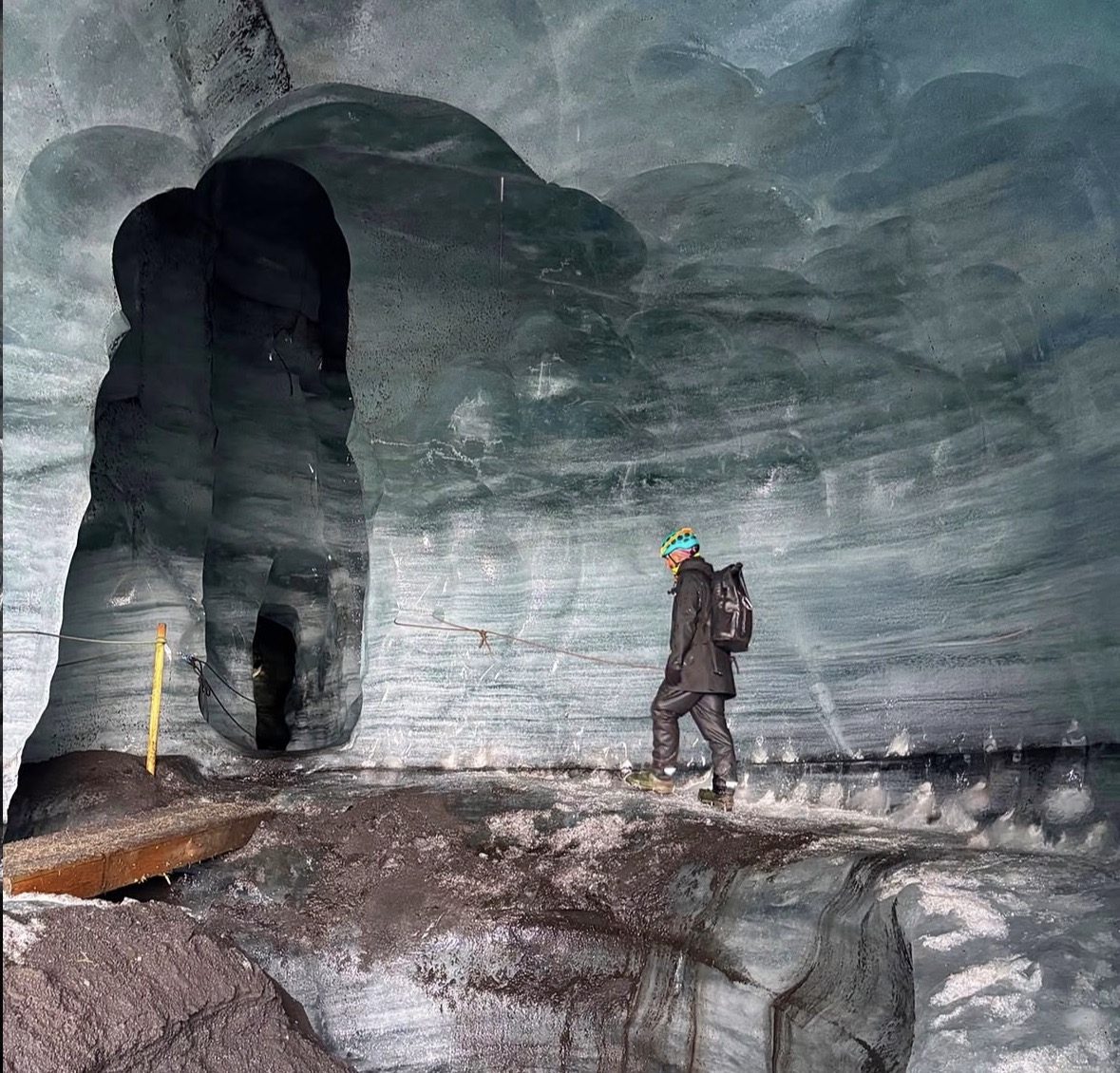
The ice cave itself bears unmistakable evidence of Katla's volcanic character. One of its most visually stunning features is the presence of thick black ash layers running horizontally through the glacial ice, each representing a distinct volcanic eruption preserved in geological time. These dark bands, sandwiched between translucent blue ice, create a dramatic visual record of Iceland's volcanic past — a natural archive stretching back hundreds of years. The vibrant blue color of the surrounding ice results from centuries of compression that has expelled virtually all air bubbles from the glacier, allowing light to penetrate deeply and scatter as vivid cobalt and azure hues that give the cave its otherworldly, ethereal atmosphere.
For most of Iceland's recorded history, the subglacial caverns beneath Mýrdalsjökull were inaccessible, known only to local farmers and the occasional geologist brave enough to venture near the volatile volcano. It was not until the late 20th century, as adventure tourism began flourishing in Iceland, that guides started leading small groups onto Mýrdalsjökull glacier for ice-climbing and snowmobile expeditions. The ice caves themselves remained largely unknown to international travelers until the early 2000s, when a small number of Icelandic glacier guiding companies began organizing supervised cave exploration tours. The excursions were initially seasonal, weather-dependent, and extremely niche — a far cry from the global phenomenon they would soon become.
Iceland's tourism explosion of the 2010s transformed Katla Ice Cave's profile entirely. Following the internationally televised eruption of nearby Eyjafjallajökull in 2010 and Iceland's subsequent rise as one of the world's most desirable travel destinations, interest in Iceland's geological wonders skyrocketed. Visitor numbers to Iceland grew from approximately 488,000 in 2010 to over 2.3 million by 2018. Tour operators in the Vík í Mýrdal area — the small coastal village that serves as the gateway to Katla Ice Cave — expanded rapidly to meet demand. Katla Ice Cave tours became a flagship experience, with companies investing in purpose-built super-jeeps and professional glacier guides certified by Ferðamálastofa, the Icelandic Tourist Board.
The cave gained significant international media attention after being featured in numerous travel publications, nature documentaries, and social media campaigns throughout the 2010s. Its striking visual contrast of jet-black volcanic ash and luminous blue ice made it immediately iconic on platforms like Instagram, driving a new wave of visually motivated travelers. Unlike the better-known crystal ice caves found inside Vatnajökull glacier farther east, Katla Ice Cave offered something distinct: direct proximity to an active, potentially erupting volcano, adding a frisson of geological drama that few other natural attractions anywhere in the world could match. This combination of beauty and latent danger proved irresistible to adventurous travelers worldwide.
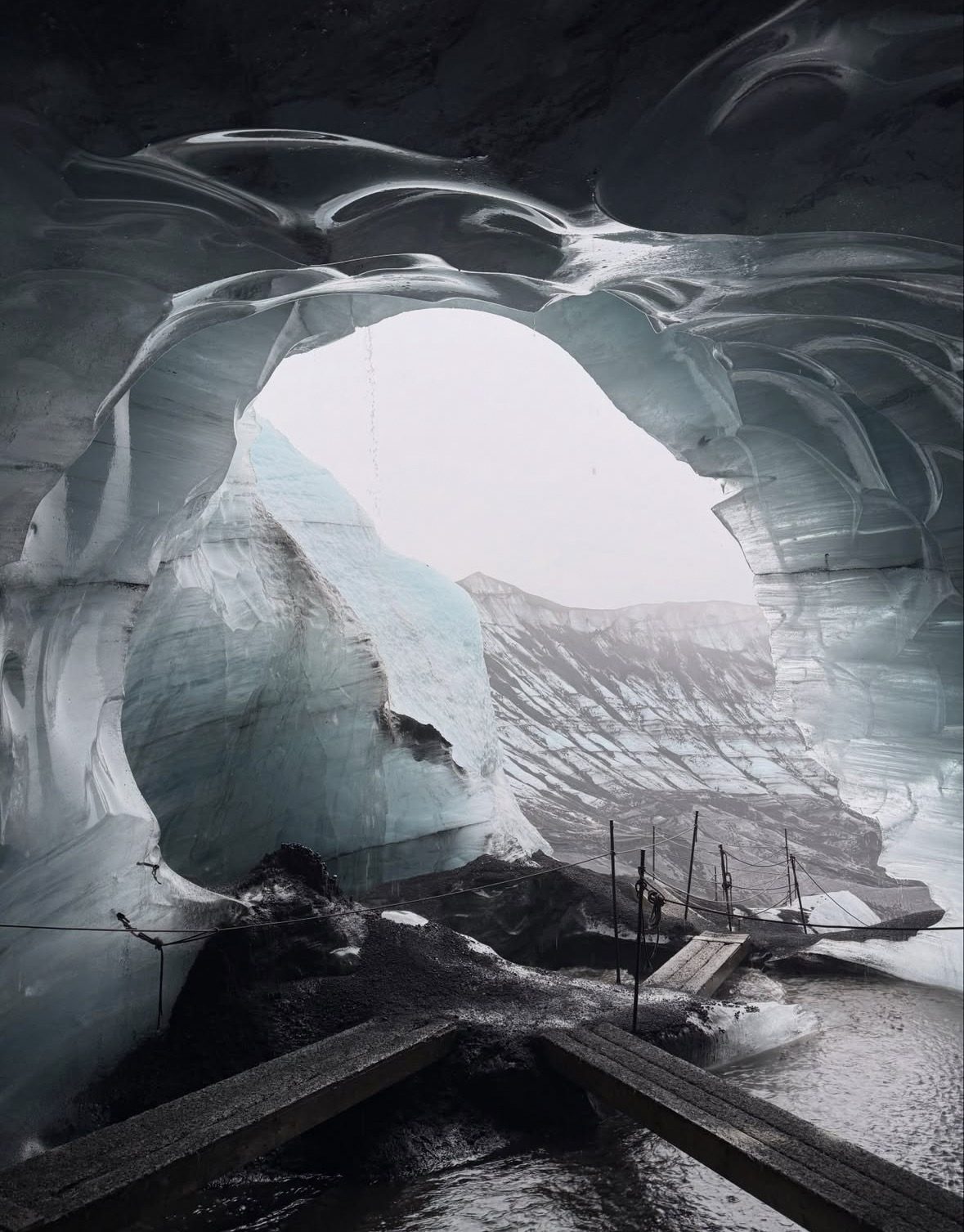
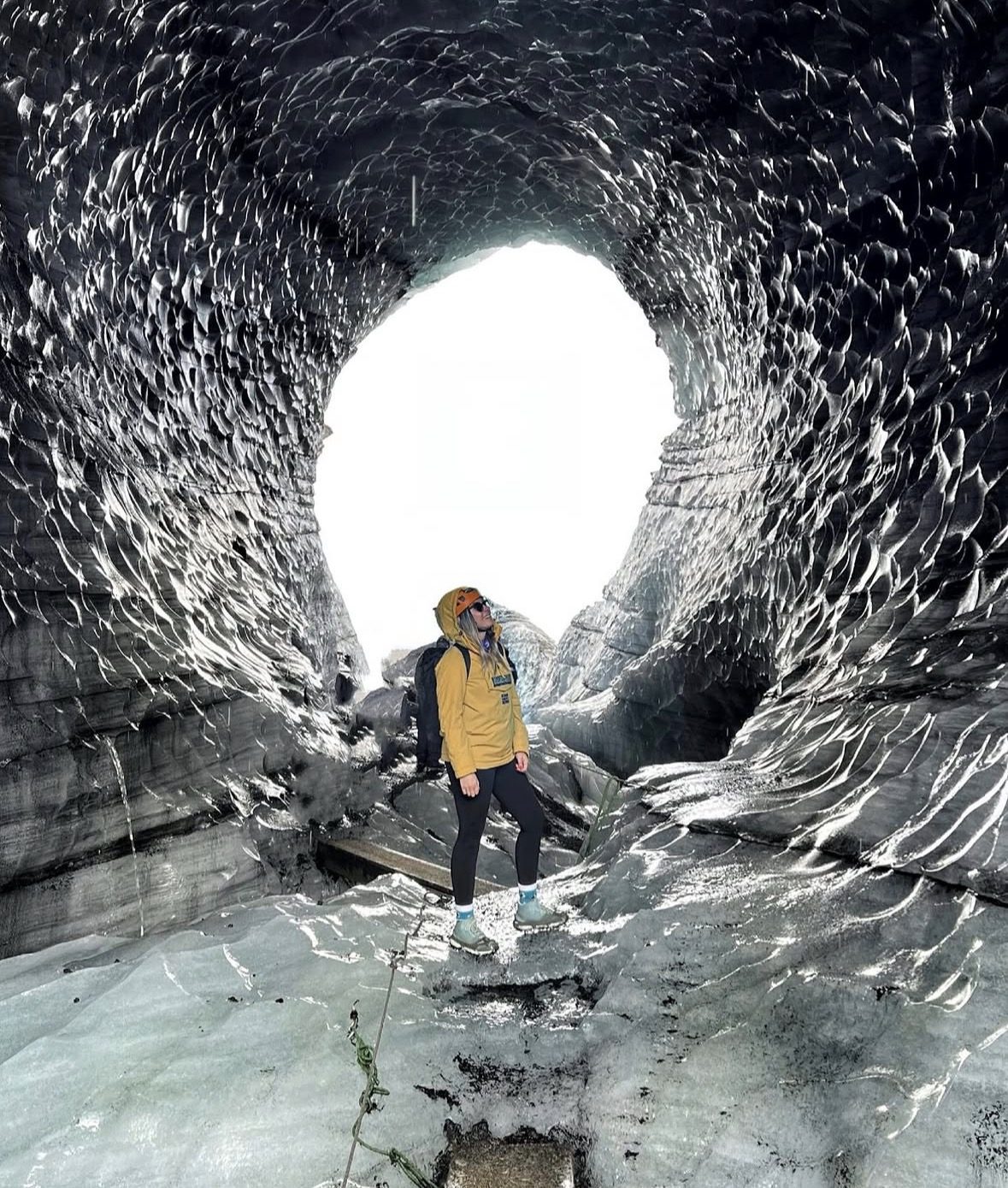
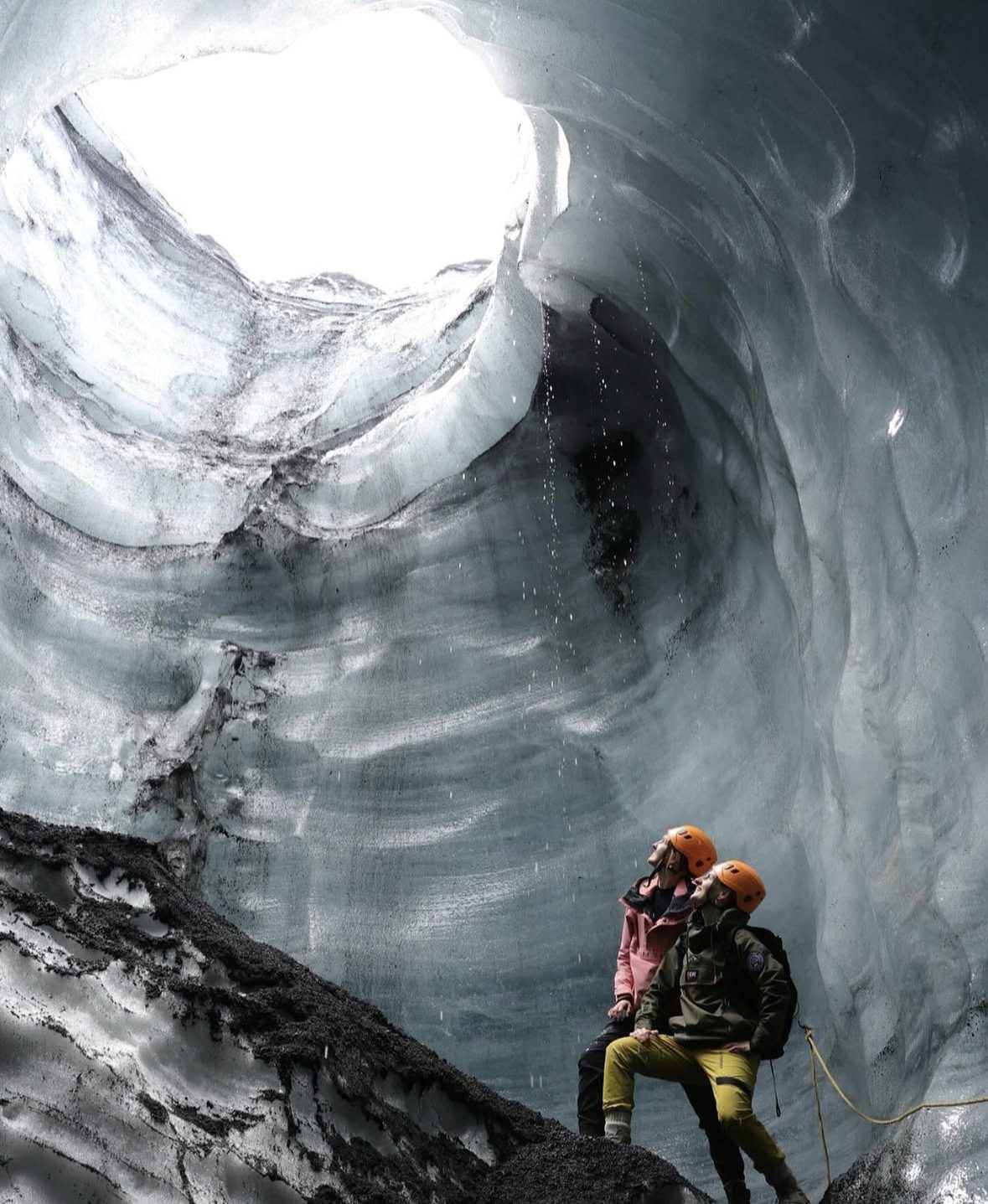
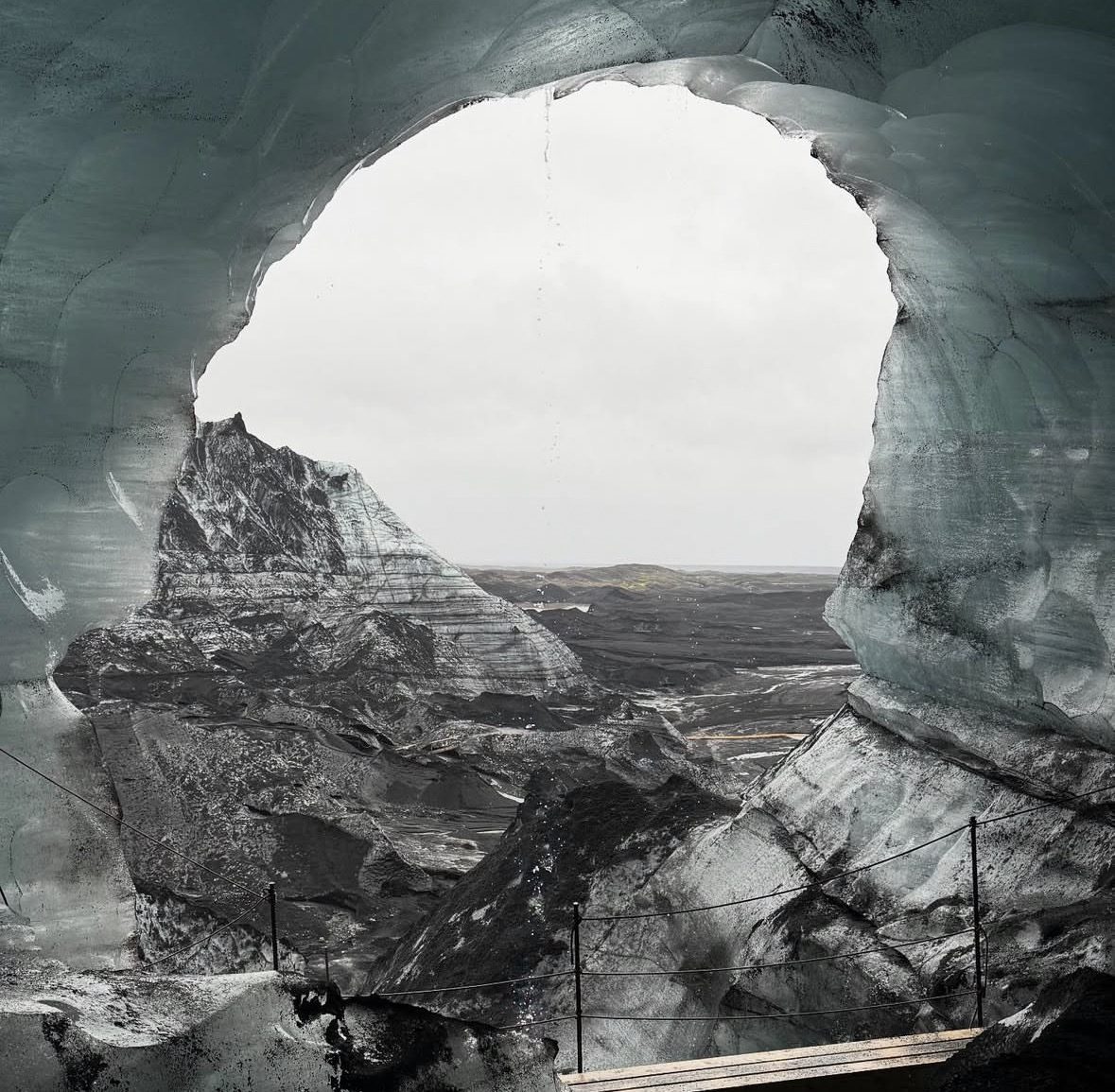
Today, Katla Ice Cave is widely regarded as one of Iceland's premier natural attractions and one of the most extraordinary ice cave experiences available anywhere on the planet. Tours depart year-round from the village of Vík í Mýrdal, just 20 minutes by super-jeep from the cave entrance on Mýrdalsjökull glacier. Professional certified guides lead small groups through ice tunnels that reach heights of up to 10 meters, past walls streaked with volcanic ash and ceilings glowing in shades of deep sapphire and turquoise. Because glacial ice caves are dynamic environments that shift with seasonal temperatures and ongoing geothermal activity, the cave's interior changes from season to season — and no two visits are ever identical.
Visiting Katla Ice Cave is more than a sightseeing excursion — it is an immersive encounter with 10,000 years of geological history, Icelandic volcanic mythology, and one of nature's most spectacular ongoing processes. Whether you stand in silence before a wall of ice layered with centuries of volcanic ash, or crane your neck to watch blue glacial light ripple across a domed ceiling, the experience leaves an indelible impression. With Katla volcano considered overdue for its next eruption by volcanologists, there is also an undeniable sense of witnessing something both ancient and impermanent. Book your guided tour soon — in Iceland's most dramatic corner, the landscape itself is always writing the next chapter.
Ready to Experience It Yourself?
Don't miss your chance to walk through one of Iceland's most awe-inspiring geological wonders, guided by certified local experts who know every twist and turn of this living glacier. Tours depart daily from Vík í Mýrdal and cater to all experience levels — no prior climbing skills required. Book your Katla Ice Cave adventure today and witness the ancient forces of fire and ice up close.
Book Your Tour Now